Eagle Ridge House
2024
Client
Nexora
The Challenge
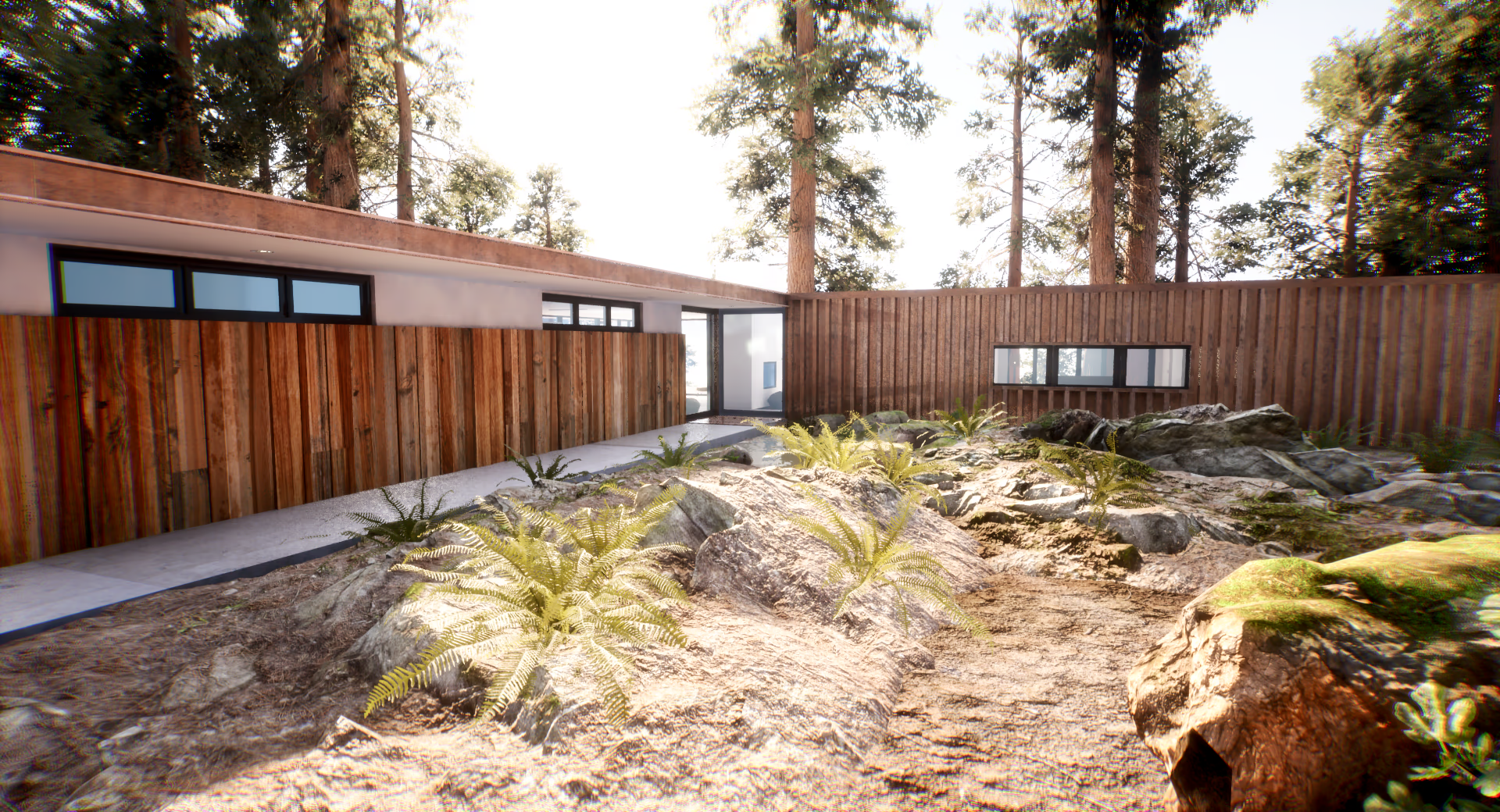
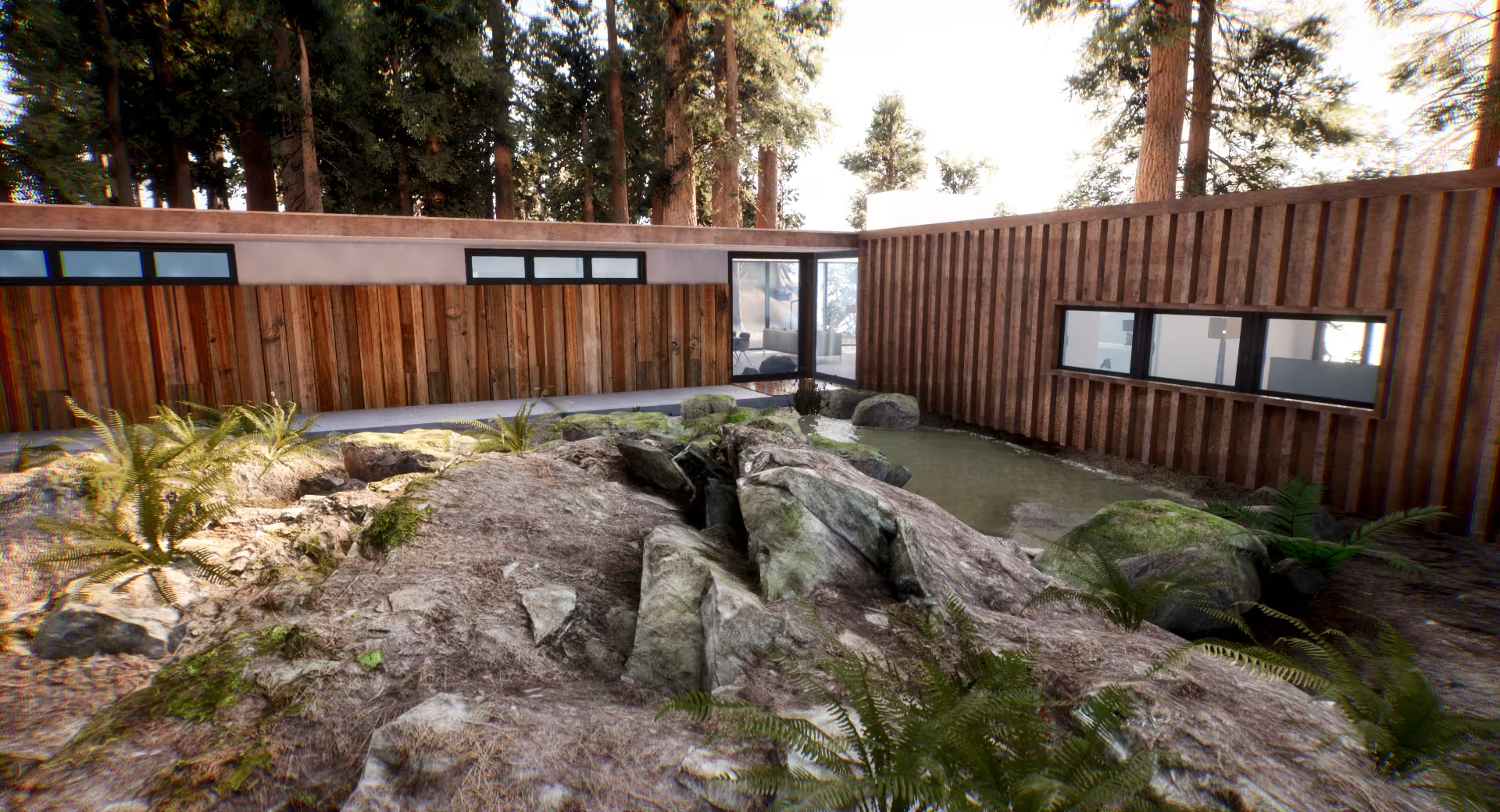
The challenge of this project was to recreate the Eagle Ridge Residence, based on the original architectural design by Gary Gladwish Architecture, as a highly photorealistic real-time experience in Unreal Engine, covering both interior and exterior environments while preserving the intent, atmosphere, and material language of the original work.
From a 3D Lead perspective, the core complexity lay in translating the architectural vision into a real-time pipeline without compromising realism or spatial fidelity. This involved the creation of realistic vegetation systems, detailed terrain and topography, and physically accurate materials capable of responding consistently across multiple lighting conditions. The scene was designed to support both day and night scenarios, requiring careful control of global illumination, artificial lighting, reflections, and overall mood.
Beyond visual fidelity, the project incorporated a strong interactive layer within the interior spaces. Users could toggle lighting states, activate the fireplace, and dynamically change furniture materials, enhancing engagement while maintaining real-time performance and visual coherence.
The experience was further expanded through the implementation of Virtual Reality using Oculus Rift S, enabling a fully immersive architectural walkthrough. This required additional optimization, precise scale calibration, and interaction tuning to ensure comfort, realism, and intuitive navigation in VR.
The objective was not only to showcase the architecture, but to deliver a complete real-time visualization experience—faithfully representing the work of Gary Gladwish Architecture while combining photorealism, interactivity, and immersion through a modern Unreal Engine–based ArchViz pipeline.
Exterior Scene
Interior Scene
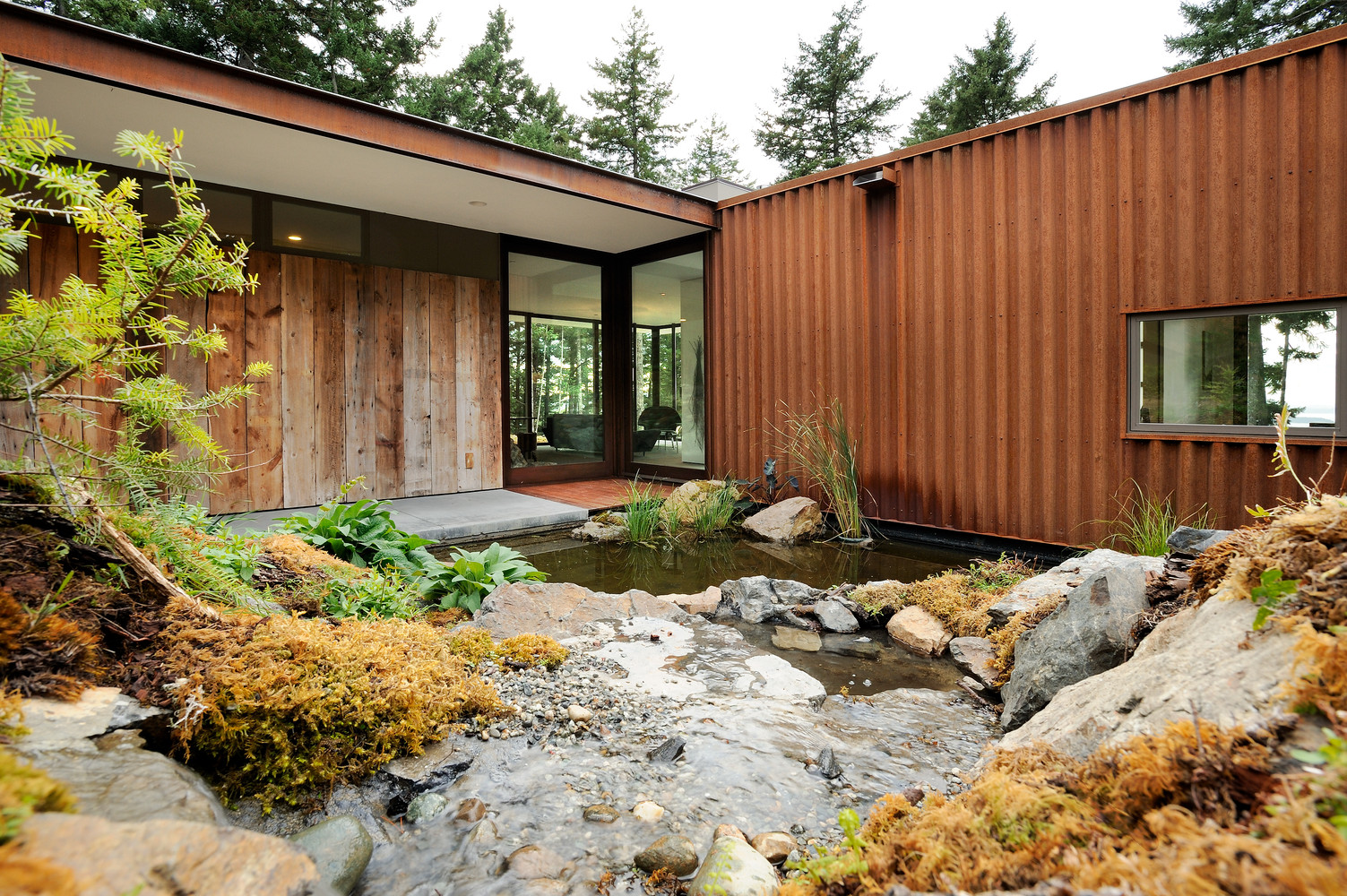
REAL FOOTAGE VS. REAL-TIME RENDER COMPARISON
This comparison highlights the visual accuracy achieved when translating real-world reference into a photorealistic real-time render in Unreal Engine. Special attention was given to matching scale, materials, lighting behavior, and environmental context, ensuring that the rendered scene follows the same visual logic as the original footage.
By carefully reproducing surface response, vegetation density, terrain detail, and natural light interaction, the real-time render maintains a strong visual correspondence with the real environment while offering the flexibility of dynamic lighting, interactivity, and real-time exploration. This comparison demonstrates the effectiveness of a physically based workflow combined with real-time rendering to achieve near photographic results.
ARCHITECTURAL AND FURNITURE MODELING IN 3DS MAX
The house architecture and all furniture assets were fully modeled in 3ds Max, focusing on accurate proportions, clean topology, and optimized geometry. A modular approach was used to ensure efficient reuse and smooth integration into a real-time pipeline, providing a solid foundation for UVs, texturing, lighting, and rendering in Unreal Engine.

LIGHTHING AND BAKED GLOBAL ILLUMINATION IN UNREAL ENGINE 4
Lighting was carefully crafted in Unreal Engine 4 using a combination of baked global illumination, ambient occlusion, and dynamic lights to achieve a realistic and cohesive interior atmosphere. Lightmap UVs and baking settings were optimized to ensure clean light distribution, accurate shadowing, and minimal artifacts.
Special attention was given to light balance, indirect bounce behavior, and material response under different lighting conditions. This approach allowed for high visual fidelity while maintaining real-time performance, ensuring consistent results across static geometry and interactive elements.